Pa Keating
Angela's AshesPa Keating is Aunt Aggie’s husband and Frank’s uncle by marriage, a familiar presence whose practical kindness becomes especially visible when the family is short of food and fuel. A survivor of gas exposure during the war, he is recognized by his cough and called the Gas Man in South’s pub. The memoir presents him through brief, concrete encounters: he offers a homespun response to fleas, comforts a grieving child, invites Frank’s father for a drink, and makes sure the children have lemonade and coal. These episodes make him a figure of neighborly assistance within a family and community marked by poverty and strained relations.
Identity and Background
Pa is identified as the man who stopped overnight during the family’s attempt to deal with fleas. His cough, which he acquired after swallowing gas in the war in France, later enables Frank’s mother to recognize him by sound. The same wartime history informs the local nickname Gas Man, used by men at South’s pub. The account also describes his dark skin and blue eyes; these details are part of Frank’s direct perception when Pa enters the room at Aunt Aggie’s home.
His marriage to Aunt Aggie places him within the McCourts’ extended family, but his position differs from that of relatives caught in disputes or silences. Frank’s account says that people talk to Pa despite the wider pattern of estrangement in Mam’s family. Pa is untroubled by whether others speak to him, and the men at South’s pub call him the Gas Man. His ease within the neighborhood gives him access to small opportunities for help that matter to the children.
A Visit During the Flea Trouble
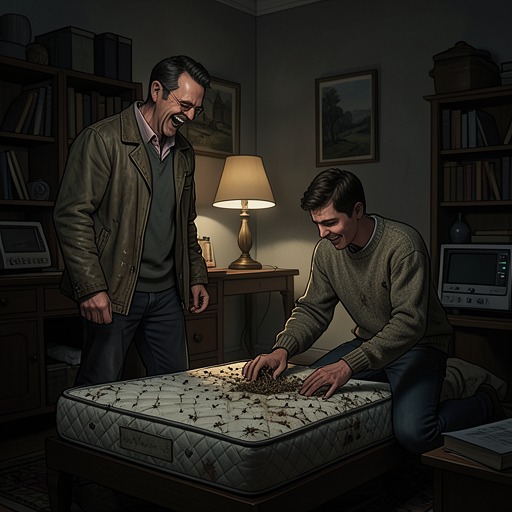
Pa first enters the narrative when he encounters Frank’s father beating a mattress in an effort to rid it of fleas. He responds with amusement and offers an improvised remedy: put the mattress upside down on the bed, he advises, so that the fleas will be confused and turn on one another rather than the people in the house. He also explains his suggestion with a story about the fleas of Irishtown in Limerick, where, he says, they were numerous and bold. His advice is comic, but the encounter establishes his willingness to stop, talk, and address an ordinary domestic problem rather than pass by.
Later, at Aunt Aggie’s house, Pa is recognized as the visitor from the flea episode and as the man with the war-related cough. He joins the adults for tea after Frank and Malachy leave the table. Pa picks up Eugene, calls him a sad little fellow, and makes faces and playful sounds. Eugene touches Pa’s skin and laughs when Pa pretends to bite his hand; the laughter spreads through the room. When Malachy tries to join in, Eugene turns away and hides his face in Pa’s shirt. The scene gives Pa a patient, playful role in a household otherwise shaped by grief and hardship.
Practical Help in Hard Times
After the family receives food from shopkeepers, Pa meets Frank’s father and expresses sympathy for his troubles, then invites him to have a pint. The gesture offers company as well as a drink, although the account does not say what follows from the invitation. Pa’s concern is not limited to the adults. On Christmas Day, Frank and his brothers go to the Dock Road to gather scraps of coal and turf because there is no fire at home. Pa comes upon them carrying a borrowed canvas bag and reacts to the fact that they lack fuel for the holiday meal.
He takes the children to South’s pub, which is officially not supposed to be open, but where he is a regular. There he orders a pint for himself and lemonade for the boys, then asks the man serving drinks whether they can have coal. The request is unusual enough to be remarked upon: the man says that in twenty-seven years of serving drink, nobody has asked him for coal. He nevertheless lets the children take what they can carry from the coal hole under the stairs, with permission to drag the heavier pieces. Pa thereby changes their scavenging expedition into a direct, practical provision of real coal.
Another brief encounter shows the same attentiveness in a less urgent setting. While Frank is helping Uncle Pat deliver newspapers, they stop at a pub because Uncle Pat says his feet hurt. Pa is there having a pint and asks whether Uncle Pat will let the boy stand without lemonade. The offer links Pa’s generosity toward Frank with his awareness of the adults around him: he notices a child’s position in the room and intervenes with a small kindness.
Family and Community Role
Pa’s bond with Frank is enacted through actions rather than extended conversation. He recognizes the children’s needs, includes Eugene in the adults’ gathering, and offers Frank refreshments when Frank is accompanying Uncle Pat on his rounds. His marriage to Aunt Aggie also makes him one of the relatives who remains approachable despite the McCourts’ broader pattern of family estrangement. Frank’s account distinguishes Pa from relatives who do not speak to one another: Pa is someone people talk to, and whether they do so matters little to him.
The recurring settings sharpen his role. At home, he brings humor and play into a room where the children and adults are managing difficult circumstances. At the pub, where he is a regular, he can turn familiarity into assistance by asking for coal. On the newspaper route, he notices Frank and offers lemonade without being asked. Across these episodes, his help is modest and immediate, but it repeatedly meets a concrete need: amusement, company, a drink, or fuel.
Narrative Significance
Pa’s appearances are episodic, yet they form a consistent portrait of practical generosity. The flea advice introduces him through comic resourcefulness; the scene with Eugene shows warmth toward a grieving child; the Christmas coal episode makes his intervention materially consequential; and the later lemonade offer confirms that he continues to notice Frank’s needs. His wartime cough and nickname remain part of his public identity, but the narrative gives equal weight to the choices he makes in ordinary encounters.
Set against the family’s poverty and its strained network of relationships, Pa represents a form of support that does not depend on speeches or formal relief. He stops, offers something useful, and draws others into the act: the pub worker supplies coal after Pa asks, while the children carry or drag it home. The memoir does not present him as solving the family’s hardship. Instead, his significance lies in how repeatedly he makes a difficult day a little more manageable through attention, humor, and access to what the children need.